
Toolio vs. o9 Solutions at a Glance
A side-by-side on the dimensions enterprise planning and finance teams weigh most. o9 details are based on publicly available information. Verify against o9's current materials.
Category
Purpose-Built for Retail
Who Operates It
Financial Planning & Inventory
AI & Forecasting
Rollout Approach
Time to Value
Support & Updates
Integration

Enterprise merchandise planning (MFP, OTB, assortment, allocation).
Merchants and planners, directly.
MFP and OTB integrated with assortment and allocation in one platform.
AI applied to user decisions, surfaced in the planning team’s workflow. No data-science team required.
Phased, module by module.
Months, not years. Typically ~2 months to stand up a module.
Dedicated support, continuous updates, little IT lift.
Configurable, flexible, ERP, POS, and e-commerce connections.

Enterprise supply chain & integrated business planning, with retail capabilities layered on.
Analysts, data scientists, and consultants.
Handled within a broader integrated business planning suite.
Powerful data-science-led demand/supply modeling; typically needs technical resources to configure and run.
Large-scale configuration / cutover.
Often a multi-year program.
Requires dedicated IT headcount. Updates, changes often involve external consultants.
Difficult, time-consuming integrations. Requires expert implementers, adding cost and disruption.
What Separates Toolio and o9
Both platforms operate at enterprise scale. That's a given for either choice. The real decision is everything that comes after: how fast you're live, who can run it day to day, and whether it fits the way merchants actually work. That's where o9's size starts to cut the other way.
Toolio goes live in phases, typically a couple of months per module; o9 deployments commonly run as multi-year programs.
The real risk in enterprise planning isn't capability, but a long, costly implementation that stalls before it delivers. Toolio rolls out module by module, so a team sees value from the first phase instead of waiting for a full transformation to complete. That phased approach is the core difference in how the two get deployed.
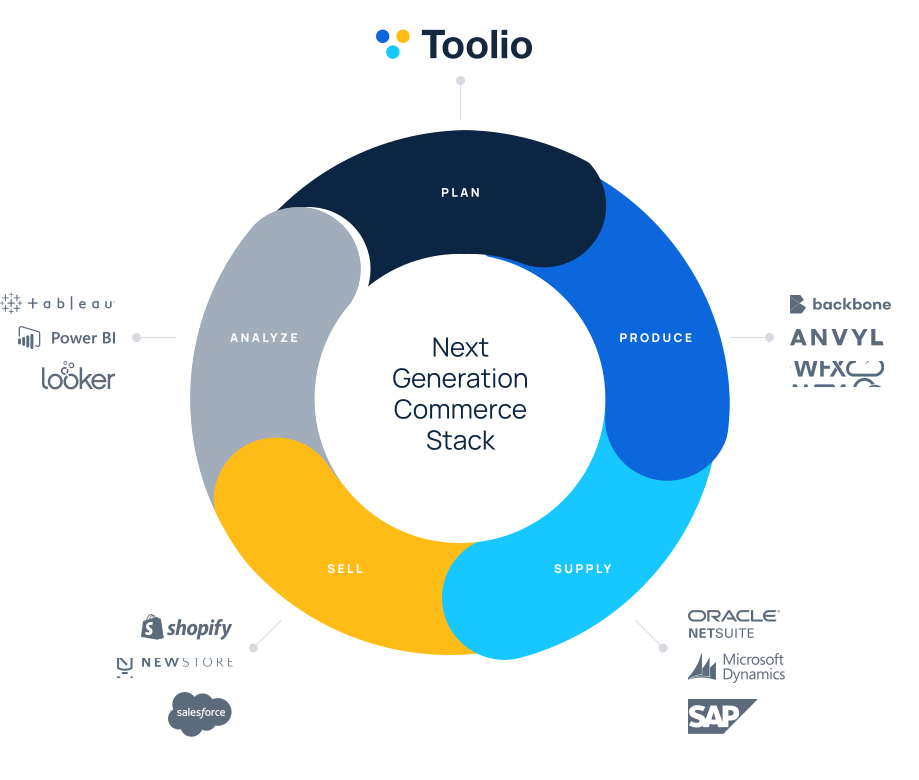
Toolio is operated by merchants and planners directly; o9 typically depends on analysts, data scientists, and consultants.
Planning teams can adjust Toolio to how they work: assortment structures, metrics, and workflows without routing every change through IT. o9's breadth is real, but that configurability usually requires technical resources to set up and maintain, which slows day-to-day decisions for a merchandising team.
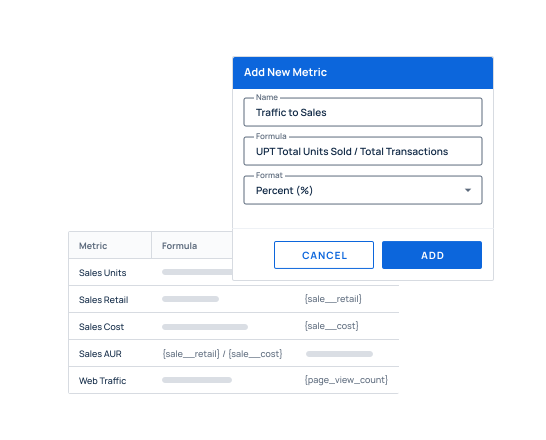
Both bring AI to forecasting; the difference is who can use it. Toolio puts forecasting in the planner's hands; o9's data-science-led modeling typically needs a technical team to operate.
o9 is a capable forecasting engine at enterprise scale. Toolio takes a different path: AI is embedded in the planning workflow and surfaced where merchants make calls on buys, reorders, and markdowns. The people closest to the assortment act on it directly, without a separate modeling team.
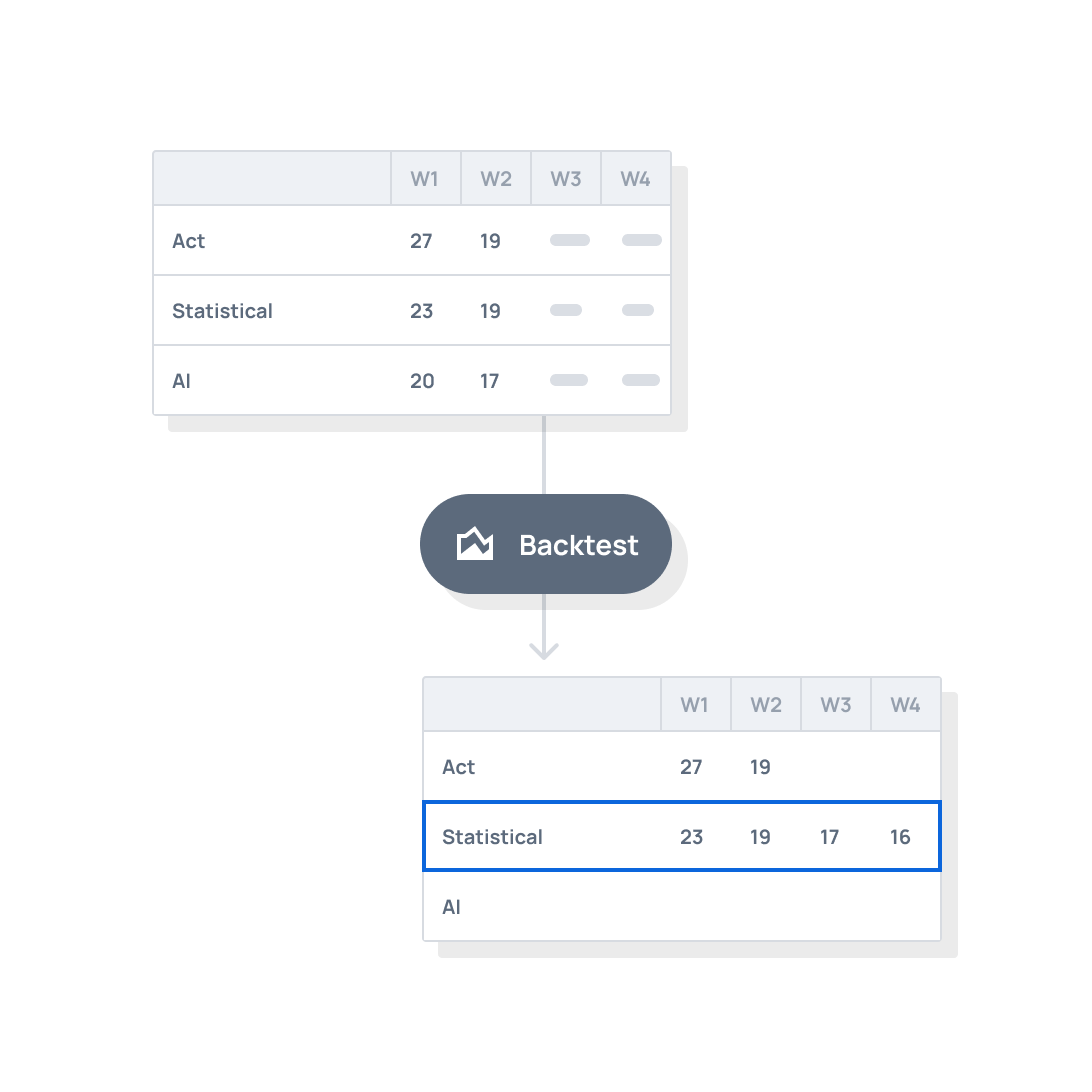
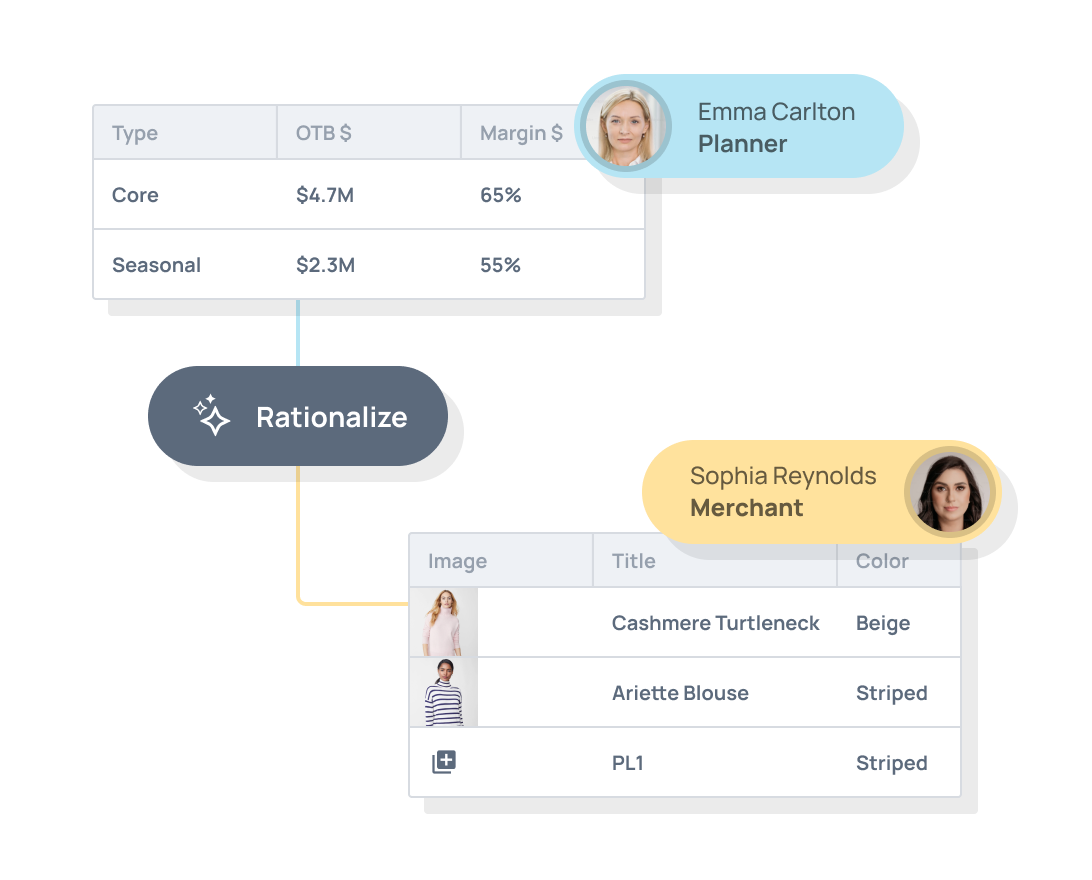
For retail MFP and OTB owned by merchandising, Toolio is the more direct fit; o9 handles financial planning inside a broader supply-chain suite.
Toolio connects financial targets to open-to-buy, assortment, and allocation in one place, so the numbers a finance leader cares about and the inventory decisions a planner makes stay in sync. This is a frequent gap for teams evaluating broad planning suites that weren't designed around the retail merchant workflow.
Toolio covers assortment and allocation in the same platform planners use daily, with shared plans across merchandising and finance.
Decisions about what to carry, where to place it, and how to manage it in-season happen in one connected workflow rather than across handoffs. Teams collaborate on the same plan instead of reconciling separate models.

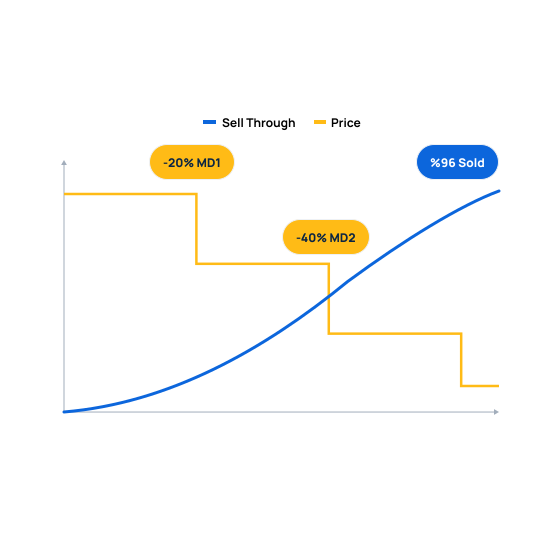
Toolio keeps inventory aligned to demand so teams hold the right stock without overbuying.
Connected financial and inventory plans mean buys ladder up to margin and sales targets, and in-season signals surface early enough to act; the difference between catching an overbuy in week two and discovering it at markdown.
o9 lets you configure nearly every aspect of the platform: planning modules, data integrations, and modeling. In principle you can tailor it to match your processes exactly. That breadth makes it well suited as an enterprise supply-chain planning system with retail capabilities layered on, spanning demand, supply, and integrated business planning across the business.
It typically calls for larger teams and meaningful IT involvement to configure, test, and maintain. If your priority is end-to-end supply-chain planning and you have the technical resources to manage it, o9 can be the right choice. If merchandise planning is the priority and speed to value matters, Toolio is the more direct fit.
See Toolio In Action
The best way to understand what Toolio could do for your team is to start a conversation.
Toolio typically stands up a module in a couple of months and rolls out in phases, where o9 deployments commonly run as multi-year programs. You see value from the first module instead of waiting for a full transformation.
No. Toolio rolls out in phases, module by module, which lowers implementation risk compared with a single large-scale cutover.
Yes. Enterprise retail and apparel brands $20B+ run merchandise planning on Toolio.
Yes. Toolio is SOC 2 Type II certified, the data-security standard most enterprise procurement and IT reviews require.
Toolio connects to ERPs (NetSuite, SAP), e-commerce platforms (Shopify), POS and wholesale order management, and data warehouses (BigQuery, Snowflake, Redshift). Data syncs automatically and incrementally, so plans always reflect current actuals.
Yes. Toolio applies AI to merchant decisions and surfaces it inside the planner's workflow, rather than requiring a data-science team to build and tune models.
For retail merchandise financial planning and open-to-buy owned by the merchandising team, Toolio is the more direct fit. o9 handles financial planning inside a broader integrated business planning suite that spans the supply chain.
Yes. Toolio is operated by merchants and planners directly, with no dedicated analytics or modeling team required.
Yes. Merchandise financial planning, open-to-buy, assortment, and allocation live in one platform, so financial targets and inventory decisions stay connected.
Yes. Enterprise retail and apparel are core to Toolio, and its phased, months-not-years rollout fits brands that don't want a multi-year program.


