
Toolio vs. Centric at a Glance
A side-by-side on the dimensions that separate a dedicated planning platform from planning built on PLM. Centric details are based on publicly available information. Verify against Centric's current materials.
Category
Purpose-Built for Retail
Planning depth
Ease of Use & Adoption
Who Operates It
AI & Forecasting
Flexibility
Cost Model
Time to Value
Integration
Support & Updates

Dedicated merchandise planning (MFP, OTB, assortment, allocation).
A planning platform that becomes the team's daily workspace.
Familiar, spreadsheet-like interface; fast to learn and adopt.
Merchants and planners, directly.
AI applied to merchant decisions, surfaced in the planning workflow. No data-science team required.
Planners configure attributes, hierarchies, and workflows themselves.
Predictable modular SaaS. Pay for the modules you use.
Months, not years. Typically ~2 months to stand up a module.
Configurable ERP, POS, and e-commerce connections; cloud-native.
Dedicated support, continuous updates, little IT lift.

PLM and product development, with planning built aroud it.
Planning anchored to PLM; some teams supplement with spreadsheets.
Feature-rich but complex; steeper learning curve, extensive training.
Planning plus PLM/product teams, with vendor services support.
AI and forecasting are newer additions layered onto a PLM-first platform; less central than in a dedicated planning tool.
Rigid, PLM-first structure; changes often need vendor services.
License fees plus add-on modules, customization, and training hours.
Often many 12-18 months; configuration-heavy, IT-involved.
Can be rigid and resource-intensive, with data-sync challenges.
Updates and upgrades can require vendor services, adding cost and time.
What Separates Toolio and Centric Software
Toolio is built only for merchandise planning; Centric's planning is an extension of its product-lifecycle suite.
Because Toolio connects all three: MFP, open-to-buy, assortment, and allocation it becomes the planning team's daily workspace. With Centric, planning is anchored to PLM architecture, which is why some teams find it less agile for merchandising and end up supplementing with spreadsheets.

Toolio uses a familiar, spreadsheet-like interface. Centric is feature-rich but complex, and typically requires extensive training.
Planners, merchants, and allocators see only what they need to make a decision, so teams ramp quickly and start getting value without lengthy onboarding. Centric's breadth means more menus, more clicks, and a longer path to productivity for new users.
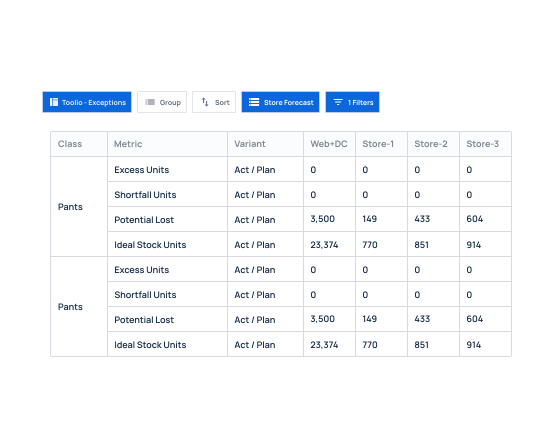
Toolio teams configure workflows themselves; with Centric, customization and configuration often require paid service hours or add-on modules.
Toolio's modular SaaS pricing is predictable, and adjustments don't require consultants. Customers frequently note that Centric's total cost of ownership grows once training, services, and modules that looked like standard functionality are added in.

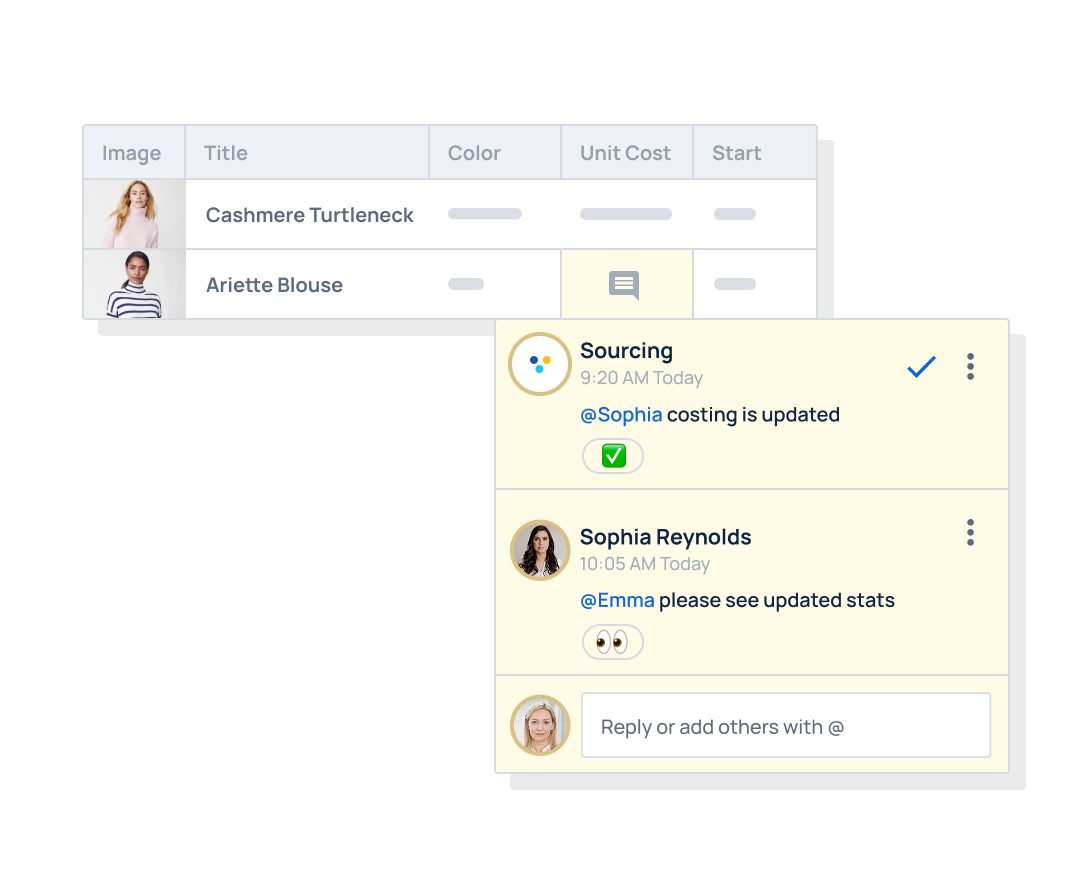
Toolio covers assortment and allocation in the same platform planners use daily, with shared plans across merchandising and finance.
Choosing what to carry, where to place it, and how to manage it in-season happens in one connected workflow, so teams collaborate on a single plan instead of reconciling across PLM modules and side spreadsheets. This is where Centric most often shows up as an option, and where a dedicated planning workflow wins on speed.
Toolio is cloud-native and goes live in months, phased by module; Centric implementations are typically longer and configuration-heavy.
After go-live, Toolio is managed by the planning team, not IT. Routine changes and reporting don't wait on a services queue. Centric rollouts tend to involve heavier IT effort and ongoing specialist support for updates.
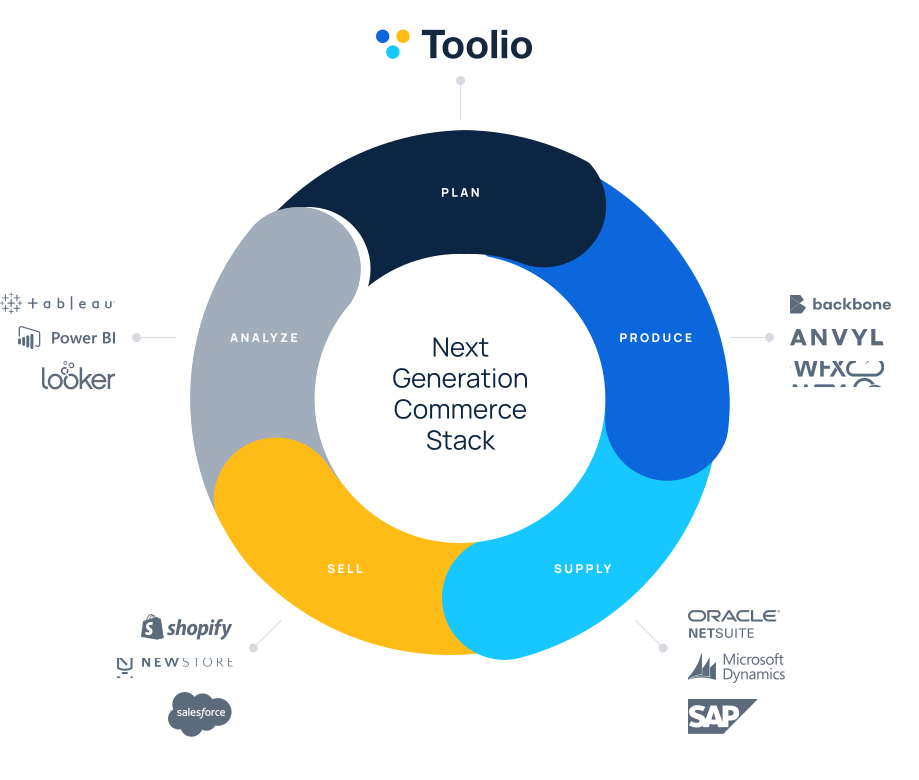
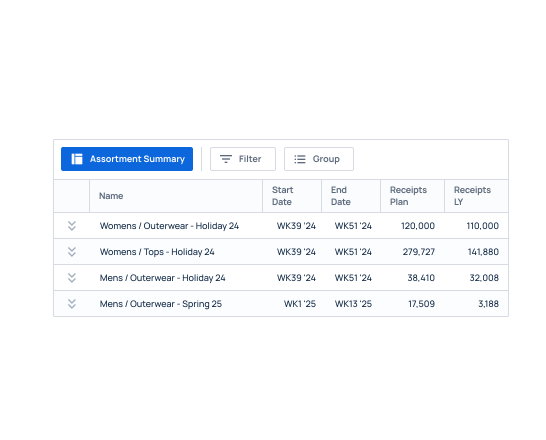
Toolio keeps MFP, open-to-buy, assortment, and allocation in one platform, so financial targets and inventory decisions stay in sync.
Plans ladder up to margin and sales targets, and in-season signals surface early enough to act. For finance and merchandising teams evaluating a PLM-anchored suite, this connected planning layer is a frequent gap.
Centric Software is a deep, well-established platform with broad functionality across product development: design, sourcing, and collaboration that can centralize the full product lifecycle in one place. For brands where PLM is the core system of record and planning is one part of a larger product-development process, that breadth is a genuine strength. It comes with a longer rollout, a steeper learning curve, and add-on costs for customization and training, so it rewards teams with the budget, IT resources, and timeline to invest. If product lifecycle management is central to how you operate, Centric can deliver.
If merchandise planning for a fashion or specialty assortment is the priority and speed and ease of adoption matter, Toolio is the more direct fit.
See Toolio In Action
The best way to understand what Toolio could do for your team is to start a conversation.
If planning and assortment are the priority, Toolio is the more direct fit. It’s a dedicated merchandise-planning platform with MFP, open-to-buy, assortment, and allocation in one place. Centric's planning sits inside a broader PLM and product-development suite.
Centric's planning is anchored to its PLM architecture, so you take on a product-lifecycle platform to plan. Toolio is standalone merchandise planning. You adopt the planning layer without a PLM stack around it.
Toolio typically stands up a module in a couple of months and rolls out in phases. Centric implementations commonly run many months with heavier configuration and IT involvement.
Yes. Toolio uses a familiar, spreadsheet-like interface built for planners, so teams ramp quickly. Centric is feature-rich but has a steeper learning curve and typically requires extensive training before users are productive.
Toolio offers predictable, modular SaaS pricing, and planning teams can configure workflows themselves without paid service hours. With Centric, customization and configuration often require paid service hours or add-on modules, so total cost of ownership can grow.
Yes. Enterprise retail and apparel brands $20B+ run merchandise planning on Toolio.
Yes. Assortment planning is core to Toolio, operated by planners directly, with shared plans across merchandising and finance so teams collaborate on one plan.
Yes. Merchandise financial planning, open-to-buy, assortment, and allocation live in one platform, so financial targets and inventory decisions stay connected.
Yes. Toolio is SOC 2 Type II certified, the data-security standard most enterprise procurement and IT reviews require.
Yes. For brands that want merchandise and assortment planning without product-lifecycle management, Toolio is the more direct fit, and goes live faster without paid customization.


